
Prostitution
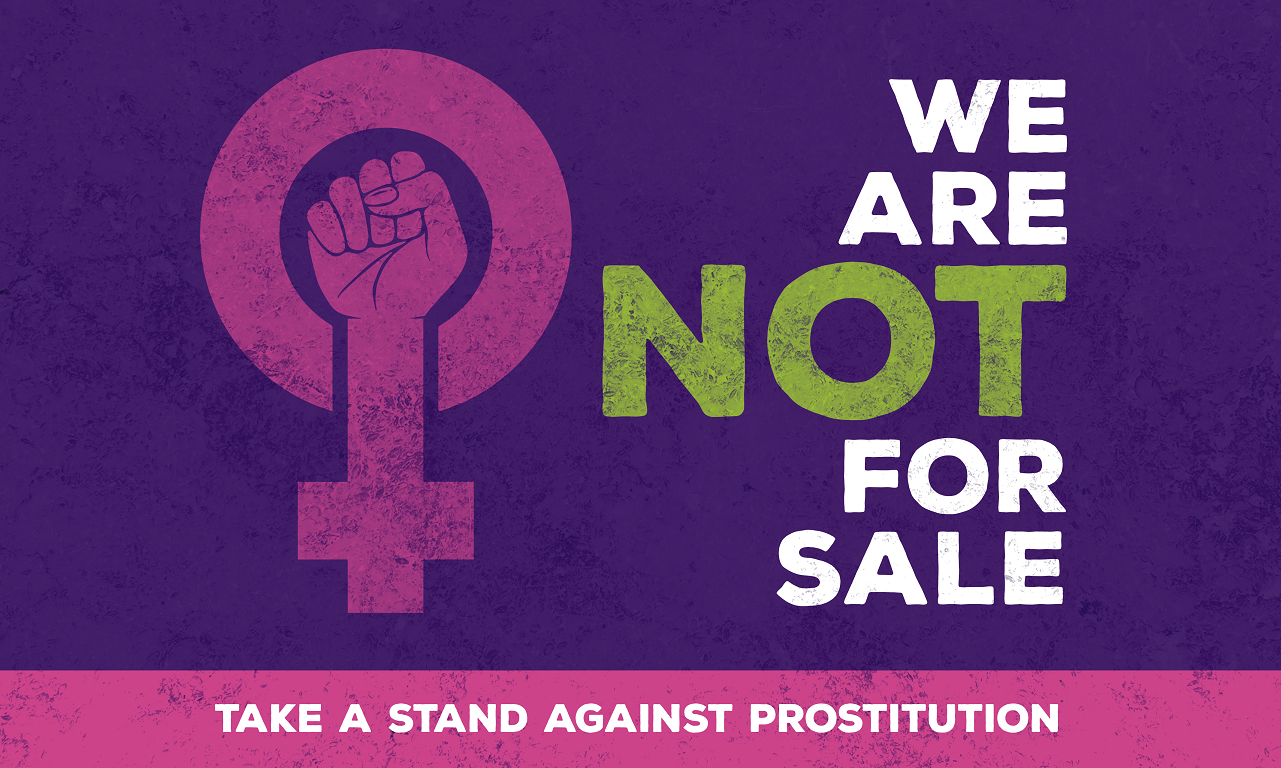
The prostitution of women and girls is an ancient form of gender violence that is structurally embedded in societies.
Socio/cultural perceptions and attitudes about relationships between men and women reinforce the system’s strength.
In responding to Prostitution, it is critical to:
unmask the lie
Identify the prostitution of women and girls as a form of gender violence; unmask the lie that it is a profession or can be dignified as an acceptable form of work.
Program Development
Develop programs, with the participation of those who have been prostituted, that provide holistic social support and empowerment, skills training, and education about human rights. Trauma awareness practices should be incorporated in programs and working for economic empowerment as a foundational approach.
reject legalization
Condemn state sponsorship of prostitution; reject the legalization of prostitution. Call for laws that do not criminalize a prostituted person but prosecutes those who sponsor commercialized sex and those who purchase sexual acts from other persons (Such laws are referred to as the Nordic model and/or the abolitionist position.)
active educators
Be active educators within communities about the dignity of girls and women and promote analysis of attitudes and traditional practices, including the issues of male sexual initiation in one’s society. Critique practices such as early marriage and honor marriage; critique sexualized images in advertising.
Prevention of Exploitation
Ensure good practices for prevention of sexual and gender exploitation. This requires up to date awareness of information technology, on-line practices of ensnarement, acceptance of pornography, and popular proliferation of attitudes that demean women.
Economic Inclusion
Use the SDGs, particularly 5 & 8.3 in program planning and implementation. Promote policies that support results-based gender inclusion, economic opportunities, job creation, entrepreneurship, creative and innovative income generating projects, including women’s
access to financial services and land ownership.
policy formation
Contribute to policy formation through participation and leadership in campaigns, and conferences, articulating and clarifying that prostitution is a form of gender violence.
Global Plan of Action
Be conversant with initiatives of UN Women, the UN Global Plan of Action to Combat Trafficking in Persons (2017); support national laws that favor abolition policies. Know recent trends and research on the topic.
educational programs
Include awareness in educational programs of the cross-sectional issues that influence prostitution: migration realities, gender discrimination, unrestrained consumerism, militarism, economic and patriarchal systems, and feminization of poverty.
service and advocacy
Expand capacity for service and advocacy through use of effective networks and initiatives, in cooperation with the NGO work of the GSIJPO.
Human Rights tools
Support international Human Rights tools, including the UN 1949 Convention for the Suppression of the Traffic in Persons and of the Exploitation of the Prostitution of Others and the (Palermo) Protocol to Prevent, Suppress and Punish Trafficking in Persons, especially Women and Children of the Convention against Transnational Organized Crime.
OLCGS
Use the OLCGS NGO office in Geneva for human rights reporting for the UN CEDAW and the CRC with its Optional Protocol on the Sale of Children. Do the same on national level.